


Looking for something similar? – Get in touch and we'll help you find the perfect piece.
This striking Tibetan altar cabinet combines a 19th-century hardwood structure with later repainting carried out in the mid–late 20th century. The cabinet’s proportions, form, and construction are characteristic of Tibetan altar furniture of the 1800s, while the vivid blues and greens across the front panels are unmistakably modern pigments. Such saturated tones do not occur in antique Tibetan mineral palettes and clearly reflect a 20th-century renovation, a practice commonly undertaken in monasteries and family homes to revitalise treasured pieces.
The decoration is executed using a modern interpretation of the kyungbur technique, in which raised outlines are built up before colouring. True historic kyungbur work is layered and mineral-based, while the smooth, sharply defined relief lines seen here correspond to modern repainting rather than original 19th-century pigment work.
Across the front panels, powerful dragons soar among stylised clouds, each grasping a chintamani, the wish-granting jewel symbolic of prosperity, protection, and auspicious fulfilment in Tibetan Buddhist art. The lower frieze features Kīrtimukha—the protective “Face of Glory.” In Tibetan, this guardian head is known as gZi pa (often transliterated Zeeba / Ziba / Zipa / Zipak), a self-devouring protective emblem placed above shrines, thresholds, and sacred objects throughout Tibet and the Himalayan region.
Cabinets of this form became increasingly widespread in 19th-century Tibet, gradually replacing earlier trunk-like storage chests. Constructed from cedar or pine, they functioned as domestic or monastic altar cupboards, used to store sacred scrolls (pecha), silk garments, jewellery, butter-lamp materials, ritual implements, and household offerings. Highly decorated pieces were often presented to monasteries as devotional gifts.
A bold and symbolically rich Tibetan altar cabinet that blends 19th-century craftsmanship with the vivid aesthetic of its later repainting—an evocative reflection of Tibet’s evolving devotional traditions.
UK Delivery: £40 (4-8 working days) by insured courier to ground floor. Typical lead time 1–2 weeks.
Returns: You can return items within 30 days of receipt for a refund (excluding delivery costs). Items must be returned in the same condition and suitably packed. Please notify us within 7 days of receipt of your intent to return. To start a return, please contact us.
Free Delivery is for UK orders over £250. Use code DELIVERY at checkout
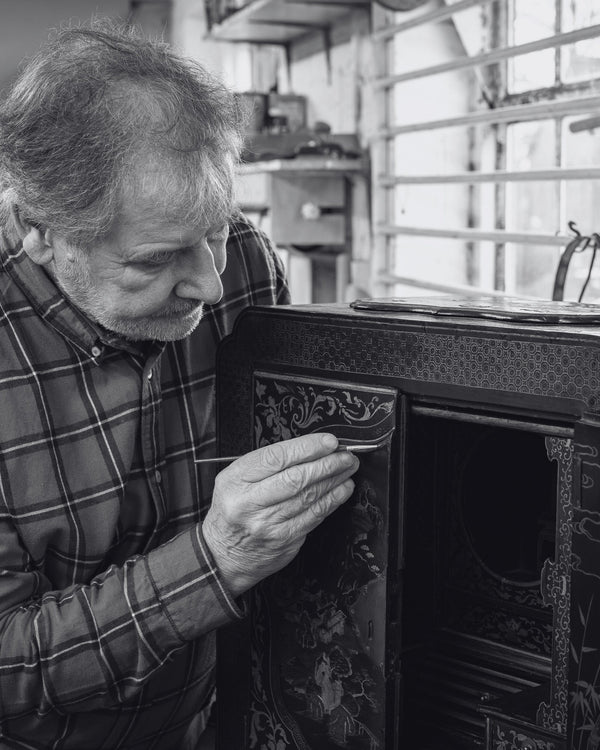
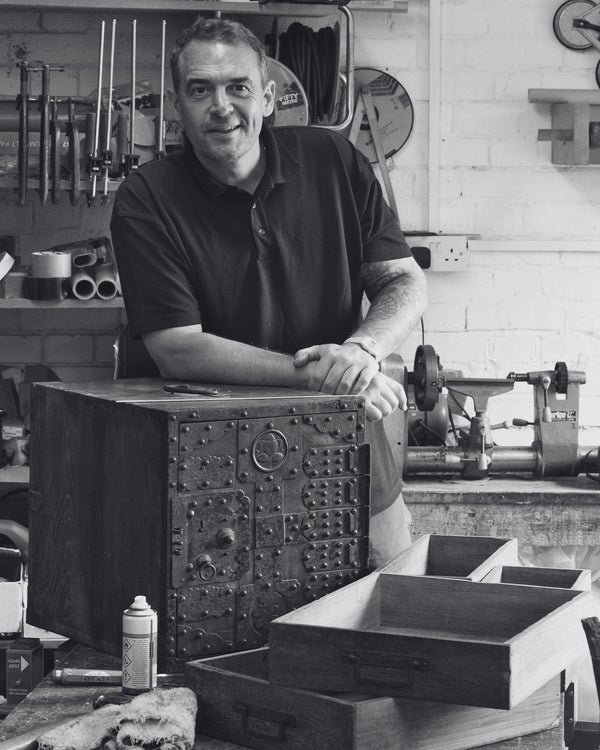
Our expert restorers treat every piece with the respect it deserves.
Using traditional techniques and the highest quality mineral pigments, each piece leaves our workshop only after receiving the highest level of craftsmanship, precision and care.
Curating beautiful collections of rare Asian Antiques since the mid 1970's.
Get in touch with us today to set up a trade account.