


Antique Japanese Black Lacquer Isho Dansu From Tsuruoka, Yamagata - Meiji Period | Indigo Antiques
Angled View Of Antique Japanese Black Lacquer Isho Dansu From Tsuruoka, Yamagata - Meiji Period | Indigo Antiques
Corner Detail From Antique Japanese Black Lacquer Isho Dansu From Tsuruoka, Yamagata - Meiji Period | Indigo Antiques
Bottom Corner detail From Antique Japanese Black Lacquer Isho Dansu From Tsuruoka, Yamagata - Meiji Period | Indigo Antiques
Top Down View Of Antique Japanese Black Lacquer Isho Dansu From Tsuruoka, Yamagata - Meiji Period | Indigo Antiques
Split View Of Stacking Antique Japanese Black Lacquer Isho Dansu From Tsuruoka, Yamagata - Meiji Period | Indigo Antiques
Small Compartment Detail From Antique Japanese Black Lacquer Isho Dansu From Tsuruoka, Yamagata - Meiji Period | Indigo Antiques
Ironwork Detail From Antique Japanese Black Lacquer Isho Dansu From Tsuruoka, Yamagata - Meiji Period | Indigo Antiques
Small Drawer Detail From Antique Japanese Black Lacquer Isho Dansu From Tsuruoka, Yamagata - Meiji Period | Indigo Antiques
Large Drawer Detail From Antique Japanese Black Lacquer Isho Dansu From Tsuruoka, Yamagata - Meiji Period | Indigo Antiques
End Detail From Antique Japanese Black Lacquer Isho Dansu From Tsuruoka, Yamagata - Meiji Period | Indigo Antiques
ack Of Antique Japanese Black Lacquer Isho Dansu From Tsuruoka, Yamagata - Meiji Period | Indigo Antiques

Japanese Black Lacquer Isho Kasane Dansu From Tsuruoka - Meiji Period

SKU: M780 Early 20th Century, from Japan

Dimensions:
W90 x D43 x H107 cm
Quality:
Every piece restored & checked in UK

Looking for something similar?Get in touch and we'll help you find the perfect piece.

This striking antique Japanese Dansu chest is finished in black lacquer. It is a isho kasane dansu. Kasane is a 'chest on chest' and isho refers to its primary function as a clothing chest. This style of black lacquer tansu was found in both Tsuruoka & Sakata towns of Yamagata. Sakata ironwork was flat and thick whereas Tsuruoka specialised in repoussé (raised metalwork). This chest dates to the late 19th century in the Meiji period (1868 - 1912) and is constructed from kiri and would have been made in Tsuroka in Yamagata prefecture. It would have been made for a wealthy owner as even the back of the tansu is lacquered. 

This design of black tansu was often presented to a bride in her new home. The top drawers would hold quality clothing and the bottom section would usually hold underwear. The small compartment concealed behind the hinged door would have stored valuables. This style of tansu with auspicious symbols is similar to those seen on wedding kimonos. New brides would usually have taken two tansu to their new home. 

The ironwork depicts various birds among trees; bamboo, pine, cherry blossom, and ivy. A falcon, and cranes are perched in the trees. The iron drawer pulls (hikite) on the front are military fan pull shaped (gunbai) which was a classic shape used during the Meiji period. The pole hangers (saodoshi) are not covered by a metal plate showing this as an earlier piece.

The iron hardware is a reddish-brown which is achieved by yaki-urush i process of burning lacquer over a vermilion bengara base. This technique is often seen on Tsuruoka tansu. 


Dimensions:

90 x 43 x 107  (wxdxh cms)


References:

For a similar example, see Traditional Japanese Chests by K Koizumi, page 37 and Tansu by T & K Heineken, Figure 156. The latter of these is in the Tokyo furniture museum. 

Another similar example can be found in Japanese Cabinetry: The Art & Craft of Tansu by Jackson & Owen, Page 189.


From Japan

UK Delivery Charge - except Highlands & Islands £40
More delivery options available at checkout

Free Delivery is for UK orders over £250. Use code DELIVERY at checkout


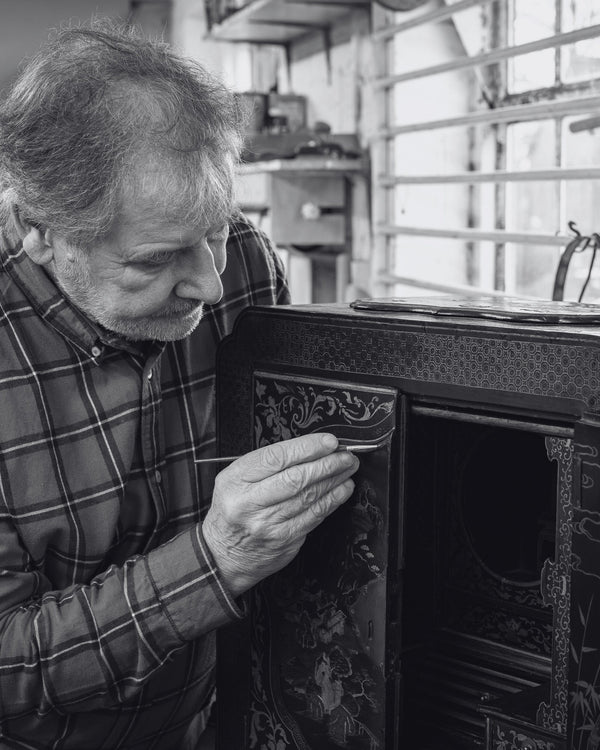
Restored in Our UK Workshop

Our expert restorers treat every piece with the respect it deserves.

Using traditional techniques and the highest quality mineral pigments, each piece leaves our workshop only after receiving the highest level of craftsmanship, precision and care.
Recently viewed

Curating beautiful collections of rare Asian Antiques since the mid 1970's.

Our story

Get in touch with us today to set up a trade account.

Trade Clients